Showing posts with label orchids. Show all posts

Sunday, July 7, 2019

Sending Orchid plants to spain

The most common problem that people face, especially when receiving a package from back home is that every package that goes through Spanish customs can be subject to fees. The Spanish government will tax anything they deem valuable and might even reserve the right to open and inspect your package. Even if the package was sent by an express, private courier company – the package will most likely stop at customs and await judgment. When you are waiting on a rather valuable parcel to arrive, chances are that you will receive a notification letter informing you of its arrival, along with a bill that must be paid before it will finally be sent to you. As you can imagine, these unexpected fees and taxes can add up.
Following instructions may make to avoid extra costs
1)Parcels that are marked as “gifts” with a value under 45€ are exempt from custom fees
2) When indicating the value of the package always make it lower that it really is, within a reasonable range
3) If a package is insured, it is assumed valuable and will most likely be taxed and held at customs
4) Keep the descriptions of the items in the package as vague as possible. Use “toiletries” rather than “makeup” or words like “gift”, “used” and “old personal belongings”
5) Remove all price tags and plastic packaging before sending new items, just in case customs does open your package
6) Use UPS for express shipments, not FedEx, because UPS operates within Spain whereas FedEx hands off packages to local couriers
7)Do not send vitamins; they always seem to be stopped and taxed
8)Mailing several smaller boxes costs more than one big box (read: one heavy box)
We didn’t find orchids in the prohibited plants list for spain. for more please refer source links below
source:

List of Prohibited Plants You Can Not Bring into Spain

http://www.pps.go.jp/english/law/list2.html

https://www.dhl.es/en/country_profile/import_guidelines_express.html

https://www.ups.com/ga/CountryRegs?loc=en_US


klairvoyant orchids

Orchid zone

Tuesday, March 26, 2019

Orchids and Japan

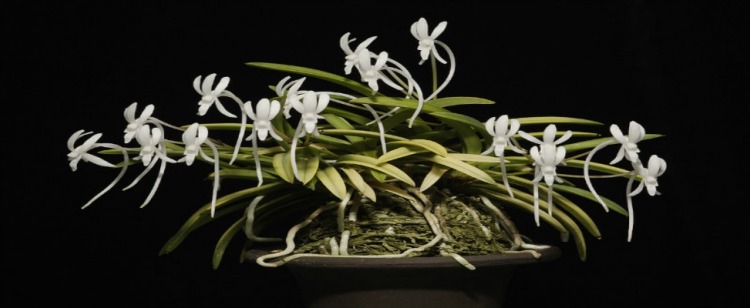
Neofinetia falcata

Neofinetia falcata

( chosen as the symbol to represent Japanese wild orchids)

Japan has four distinct seasons with a climate ranging from subarctic in the north to subtropical in the south. Conditions are different between the Pacific side and the Sea of Japan side.August is the hottest month in Tokyo with an average temperature of 26°C ) and the coldest is January at 5°C with the most daily sunshine hours at 6 in December. The wettest month is June with an average of 181mm of rain.

As a popular flower Orchid comes at 7th position in japan. Favorited orchids in japan are cymbidium,paphiopedilum, RHIZANTHOID CATTLEYA. usually plants required full shade and temperature range 14.5 C to 24 C will grown well in Japanese condition


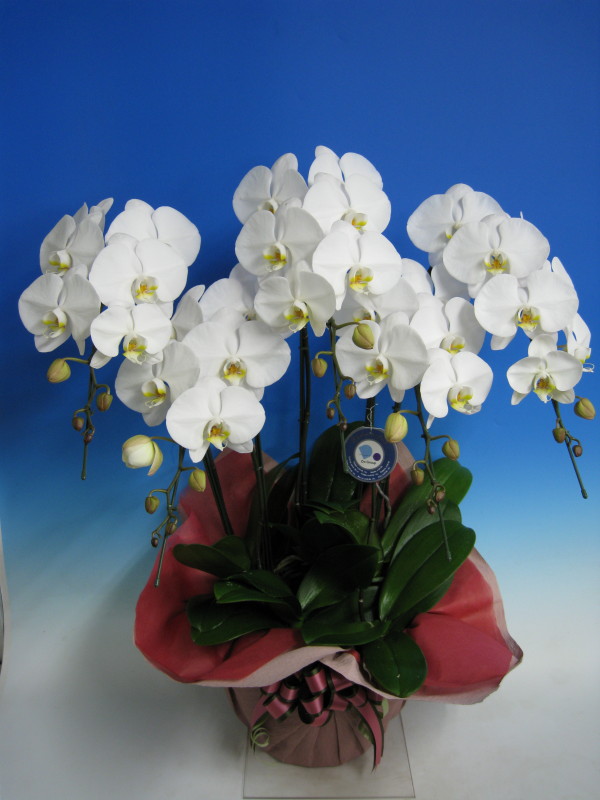
phalaenopsis as gift

  Phalaenopsis orchids as Gift

Giving moth orchids in the business world, a practice that took off during the high-growth era of the 1980s

Fuukiran

Fuukiran orchid

The 12th World Orchid Conference, a global event occurring every three years, was held in Japan in 1987. At that time, a flower of Neofinetia falcata was chosen as the symbol to represent Japanese wild orchids. Because of this, Neofinetia falcata was recognized widely among orchid enthusiasts and other plant lovers. Fuukiran means in general, a mutated or variegated Neofinetia falcata collected from the wild.   In Japanese traditional gardening, an elegant name is used to denote a valuable plant. This is true also for Rhodea japonica, Dendrobium moniliforme and Ardisia crispa. However, even if a Neofinetia falcate has variagation, it is recognized as a Fuukiran only after being registered with Japan Fuukiran Society. For instance, if a variagation of Neofinetia falcata is newly discovered, it is still just a variety of Neofinetia falcata and cannot be defined as a Fuukiran. To be a new Fuukiran , (1) the same variation must continue consistently for years, (2) the number of plants must increase to some extent, and (3) the physical characters should be clearly different from other recognized variety. After applying for registration with the Japan Fuukiran Society and receiving judgment, it is recognized as a new Fuukiran.

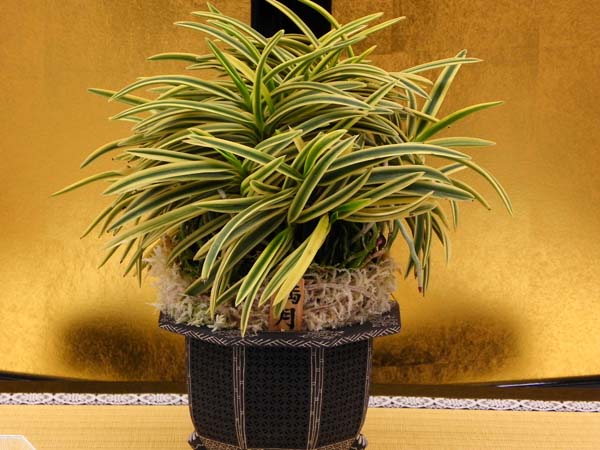
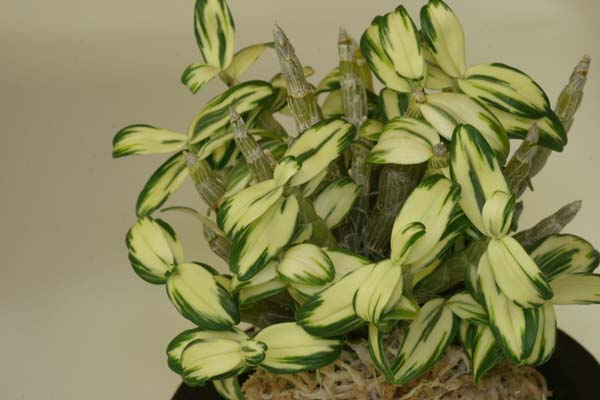
Choseiran

Choseiran orchid

 Choseiran has developed as Japanese original gardening from Edo period. It is amazing that even now many kind of Choseiran exist that discovered 180 years ago. Choseiran is a kind of cultural heritage like other traditional orchid like Fuukiran.
Choseiran is a traditional orchid growing which consists of variegated or mutated leaf Den.moniliform, collected from the wild, and was refined by peculiar sensibility based on Japanese culture. The continuance of the mutation is strictly confirmed and severely selected and finally named as a Choseiran. Its form is about 8 inches maximum and 1 inch minimum that allows many plants in a narrow space so everyone can grow them in every living circumstance. In spring their flowers and mellow fragrance give us precious moment.


Orchidzone


Advertisements

Sunday, March 24, 2019

Rhizanthoid Cattleya

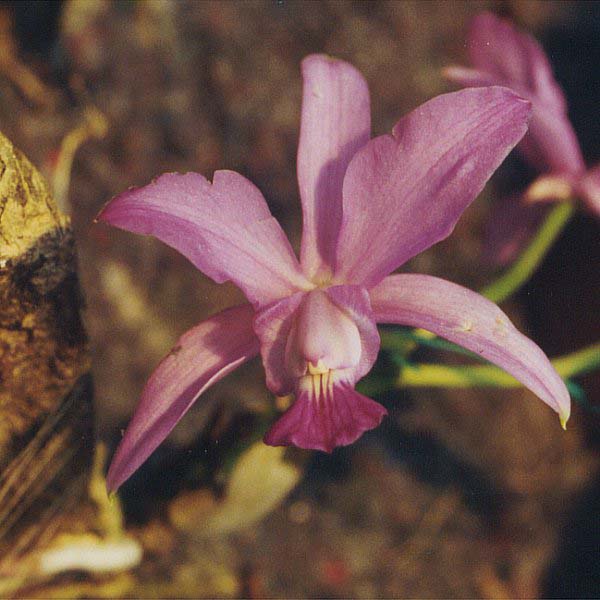
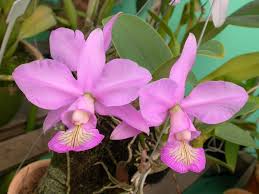
The rhizanthoid Cattleyas differ from the other species of Cattleya by having inflorescences which arise directly from the rhizome,(Refer 1st picture) instead of from the apex of the pseudobulb. (Refer 2nd picture).Its native habitat is Brazilian Central Plateau.

(1) Directly from the rhizome        (2) The apex of the pseudo bulb


Example

1) Cattleya walkeriana (Walker’s cattleya) is a species of orchid.

Cattleya_walkeriana


2) Cattleya nobilior

Referring to the flowers which are larger than those of C. walkeriana,

C.nobilior


Orchid zone

Monday, February 18, 2019

Cattleya alliance

catfeb

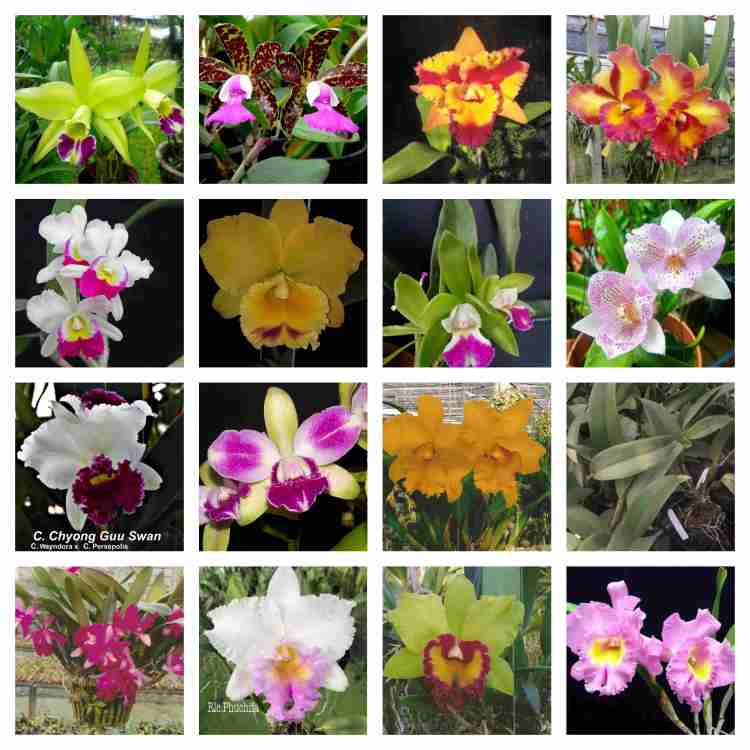
The Cattleya Alliance encompasses following

1)Cattleya(C)
2)Brassavola(B)
3)Epidendrum(EPI)
4)Cattlianthe(CTT)
5)Rhyncattleanthe(RHT)
6)Rhyncholaeliocattleya(RLC)
7)Rhyncholaelia(RI)
8)Guarianthe(Gur)
9)Brassolaeliocattleya(Blc)
10)Keyesara(key)
11)Cahuzacara(Chz)
12)Rhynchobrassoleya(Rby)
13)Brassocatanthe(Bct)
14)Brassocattleya(Bc)
15)Encyclia(E)
16)Laelia(L)
17)Schomburgkia(Schom)
18)Sophronitis(Soph)
19)Tetramicra(Ttma)
20)Rhyncholaelia(RI)
21)Reichenbachanthus(Reic)
22)Quispquea (Qui)
23)Pseudolaelia(Pdla)
24)Prosthechea(Psh)
25)Ponera(pon)
26)Platyglottis(Pgs)
27)Pinelia(pin)
28)Oleanesia(Orle)
29)Oerstedella(Oe)
30)Nidema(Nid)
31)Neowilliamsia(Nw)
32)Neocoquiauxia(Nga)
33)Myrmecophila(Mcp)
34)Meieacyllium(Mrclm)
35)Laeliocattleya(Lc)
36)Laeliopsis(Lps)
37)Lanium(Lan)
38)Jacquiniella(Ja)
39)Hoffmannseggella(Hof)
40)Helleriella(Hel)
41)Epidanthus(Ed)
42)Earina(Ear)
43)Domingoa(Dga)
44)Diothonea(Dio)
45)Dilomilis(Dilo)
46)Constantia(Const)
47)Coilostylis(Cloil)
48)Caularthron(Cau)
49)Cattleyella(Ctc)
50)Cattleyopsis(Ctps)
51)Broughtonia(Bro)
52)Basiphyllaea(Bas)
53)Barkeria(Bark)
54)Alamania(AI)
55)Acrorchis(Arr)
56)Arpophyllum(Arpo)
57)Psychilis(Psy)
58)Scaphyglottis(Scgl)
59)Brassoepidendrum(Bepi)
60)Brassolaelia(Bl)
61)Epicattleya(Epc)
62)Epilaelia(Epl)
63)Epilaeliocattleya(Eplc)
64)Schombocatonia(Smbcna)
65)Schombolaelia(Smbl)
66)Schombolaeliocattleya(Scl)
67)Sophrocattleya(Sc)
68)Sophrolaelia(Sl)
69)Sophrolaeliocattleya(Slc)
70)Stanfieldara(Sfdra)
71)Yamadaara(Yam)
72)Myrmecatlaelia(Mycl)
73)Nageliella(Ngl)
74)Oerstedella(Oe)
75)Otaara(Otr)
76)Potinara(Pot)
77)Rothara(Roth)
78)Iwanagaara(Iwan)
79)Kirchara(Kir)
80)Laeliocatonia(Lctna)
81)Leptotes(Lpt)
82)Lyonara(Lyon)
83)Maclemoreara(Mclmra)
84)Epiphronitis(Ephs)
85)Gerberara(Gba)
86)Hasegawaara(Hasgw)
87)Hawkinsara(Hknsa)
88)Isabelia(Isa)
89)Catcylaelia(Ctyl)
90)Cattleytonia(Ctna)
91)Catyclia(Cty)
92)Caulocattleya(Clty)
93)Cookara(Cook)
94)Diacattleya(Diaca)
95)Dialaelia(Dial)
96)Dimeranda(Dmd)
97)BRASSANTHE(Bsn)


source:-

1)http://bit.ly/2SXQgdc
2)http://bit.ly/2NgSwXS
3)http://bit.ly/2T3jPKc
4)http://bit.ly/2NerqQO

Advertisements

Sunday, December 9, 2018

Laelia rubescens

Oct 2012 082 copy


Laelia rubescens is a species of orchid native to Mexico and Central America.

Laelia rubescens also called as The Rosy Tinted Laelia, Amalia acuminate, Amalia peduncularis, Amalia rubescens, Bletia acuminata, Bletia peduncularis, Bletia rubescens, Bletia violacea, Cattleya acuminata, Cattleya pendicularis, Cattleya rubescens, Laelia acuminata, Laelia inconspicua, Laelia peduncularis, Laelia pubescens, Laelia rubescens f. peduncularis, Laelia violacea, is a species of the genus Laelia.
Light:
Laelia rubescens loves bright sunlight and is able to tolerate the direct morning and evening sun, however the orchid should be protected from direct sunlight otherwise the plant can get sunburn. Bright sunlight is one of the main prerequisites for the flowering of this type of orchids, and if it is insufficient, the plant will simply not bloom.

Temperature:

The most recommended temperature is: Day temperature at 21-24 ° C (maximum 32 ° C); Night temperature at 10-15 ° C; To successfully grow at home, it is necessary that the night temperature of the content is always 6 ° C lower than the daytime temperature.
Humidity:

Laelia needs relatively high humidity, not less than 60-80%. Too dry air negatively affects the growth and development of the plant: its growth is inhibited and the orchid begins to stagnate and turn yellow.
Watering:

During the period of new growth, the plant needs frequent and abundant watering. Excess water during watering should flow freely out of the pot, as the stagnation of water both inside the pot and in its pan can very quickly lead to decay of the roots and the lower part of the plant. The substrate between waterings must necessarily dry well, as the roots of the orchid are very sensitive to waterlogging. In the hot summer period, daily spraying of the outer part of the plant is recommended, this will increase the humidity around the orchid and help it to survive the heat better.
Rest period:

Immediately after flowering, Laelia rubescens undergoes a short period of rest, which is expressed by the fact that the orchid contains somewhat colder than usual, does not fertilize and rarely is watered. The ideal temperature for this period is 10-13 ° C. From watering should be discarded completely and produce it only if the pseudobulbs of the plant begin to wrinkle strongly. Growing on the blocks of orchids is recommended to spray no more than once in 10 days. With the advent of new shoots, the rest period ends: the watering of the orchid resumes in the usual volume, and the overall temperature of the contents rises.


reference

https://travaldo.blogspot.com/2018/05/laelia-rubescens-orchid-plant-care-and-culture.html


klairvoyant orchids

Thursday, November 15, 2018

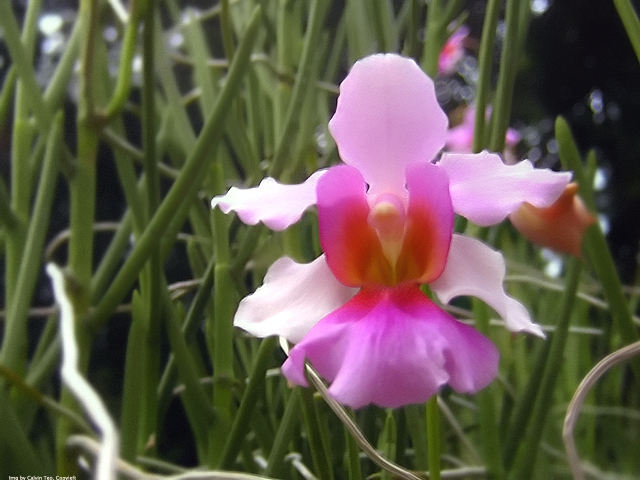
Vanda ‘Miss Joaquim’

VandaMissJoaquim

Also Known as
The Singapore orchid  or The Princess Aloha orchid

The national flower of Singapore and so it is often referred to as the Singapore Orchid. This extraordinary orchid is the first artificial hybrid The plants amazing vitality and hybrid nature was the reason why it was chosen to represent the multi ethnicity of Singapore.

Genus:- Papilionanthe

Hybrid parentage:- Vanda teres (Papilionanthe teres) × Vanda hookeriana (Papilionanthe hookeriana)


source

https://en.wikipedia.org/wiki/Vanda_%27Miss_Joaquim%27


klairvoyant Orchids

Advertisements

Sunday, October 28, 2018

Arundina graminifolia

Click to view slideshow.

Arundina graminifolia ( Bamboo Orchid  or Bird orchid )


Arundina graminifolia is a species of orchid and the sole accepted species of the genus Arundina.it is terrestrial orchid with reedy stems, forming large clumps growing to a height of 70 cm to 2 m. This orchid blooms in summer and autumn. plant resembles a bamboo. A very good bloomer.

Humidity

They like good humidity 70%.

Temperature

24-29 C  during the day with a drop of 6-8C at night.

Light

They like high light (2000-3000 foot candles) similar to the low end of Cattleya lighting.

Fertilizer

“weakly, weekly”. orchid fertilizers are used with mixing with water.

watering

Bamboo orchids should be watered as they approach dryness. Don’t let them dry out too  Much.


Klairvoyant Orchids

Advertisements

Wednesday, October 10, 2018

Masdevallia

Masdevallia orchids are commonly referred to as “Kite Orchids” because of their blooms that are almost triangular-shaped and have what looks like kite-tails coming off of each sepal.Name came after the Spanish doctor and botanist Dr. Jose MASDEVALL. The Masdevallia come from the mountain areas in South and Central America.

Flower spikes can grow to be only a few inches to more than a foot in length and each produces only one bloom. Masdevallia orchid’s blooms come in many different colors ranging from pale to almost neon as well as many different patterns such as spotted or striped.

Masdevallia kimballiana                    Masdevallia Bellavallia


Water Requirements

Masdevallia orchids should be watered frequently because they do not have pseudobulbs for water storage and they tend to dry out fairly quickly. You want to make sure to not let your Masdevallia orchid dry out completely but at the same time be sure not to overwater either.Recommend to cultivate them in sphagnum moss which stays humid for a long time without making the roots rot. The plants should not have wet feet. The quality of the water is very important.recommend rain water or any water that contains little amounts of salt.

Light Requirements

Masdevallias need low to medium light intensity in order to thrive. If your Masdevallia orchid is receiving too much light, it will cause the leaves to turn yellow in color, and too little light will cause the leaves to become a very dark green color and the leaves will become elongated. The best place to grow your Masdevallia orchid indoors is on a shaded windowsill, out of direct sunlight. If you only have a brightly lit windowsill, you might be best putting your Masdevallia in the middle of the room away from the bright light.

Temperature Requirements

Able to tolerate higher temperatures if the humidity evens out the heat. You can use humidity trays or spray regularly every morning and evening.

Temperature requirements for Masdevallia orchids are in the cool to intermediate range. ideal daytime temperatures to grow your Masdevallia orchid is between 16°C to 23°C and night temperatures are between 12.8°C to 15.6°C. A 10° to 15° difference between day and night temperatures is ideal, especially during the hot summer months. If your Masdevallia orchid becomes too hot, this could slow down its growth and ultimately kill your orchid.

Humidity Requirements

Masdevallia orchids require very high humidity levels. The higher the temperature is the higher the humidity should be. A level of 60-80 percent is recommended.

Fertilizer Requirements

Masdevallia orchids should be fertilized with a diluted solution once a week when the orchid is in active growth. When the orchid is not in active growth, fertilizing one time a month is sufficient.

Potting Requirements

Masdevallias should be repotted once every year or two or once the potting medium no longer drains properly or the plant outgrows its pot. You will want to repot after the orchids flowers have bloomed which is typically in the winter or early spring. Masdevallia orchids have fine roots so fine-grade potting media is recommended such as fir bark or tree fern fiber. After repotting your Masdevallia you should maintain a high humidity level in your orchids growing area and also keep the medium a little on the drier side until you see new roots beginning to form.


Source

http://www.orchidsmadeeasy.com/masdevallia/


Klairvoyant Orchids

Advertisements

Tuesday, October 9, 2018

Orchid plants in orchid nurseries

These shows how the orchid plants will be when buy from orchid nurseries.

Mounted On wood

With Hanging pot

On pot with Orchid Medium

On pot with soil as orchid medium ( ground orchids)

8ccded51d3320213451419f16b24c5e6


klairvoyant Orchids

Advertisements

Sunday, October 7, 2018

Malleola baliensis

Malleola

Malleola is a genus of flowering plants from the orchid family. It has about 30 species, native to Southeast Asia, China, New Guinea and Melanesia

Malleola baliensis

Malleola baliensis is included in the genus Malleola

Light and Temperature

particularly easy cultivation that can bloom several times during the year, requires high brightness, but not direct sun, medium-high temperatures, 22-30 ° C, and high humidity, 70-85% , with a good and constant ventilation.

Water

The watering must be regular, leaving it partially dry before giving water again,

Fertilizer

fertilizer alternated with the waterings to avoid accumulation of salts at the roots,

source

https://www.monaconatureencyclopedia.com/malleola-baliensis/


Klairvoyant Orchids

Sunday, September 30, 2018

Aerangis( Aergs)

A genus of the Orchid family The name of this genus has been derived from the Greek words ‘aer’ (air) and ‘angos’ (urn). Approximately 50 species in this genus are known mostly from tropical Africa, but also from the Comoro Islands, Madagascar and Sri Lanka.

Currently the Kew World Checklist of Selected Plant Families recognizes 51 species, 2 natural hybrids, and 4 varieties. it distributed Africa and its adjacent islands, including Madagascar.

Aerangis’ descendants from intergeneric hybridization have been registered.

It is not difficult to grow any of the species of Aerangis, but the plants are easily lost if growing conditions change adversely. The species from higher elevations need cooler conditions than those that occur at or near sea level, and those from near the Equator generally require warmer conditions and higher humidity than those that are found much further south at the same elevation. Details of the habitat, where known, often give an indication of the best way to manage the environment for plants in cultivation.


Aerangis biloba

This small sized, hot to warm growing, epiphytic species is from tropical western and central Africa in forests, woodland and thickets, as well as on cultivated crops such as coffee and cocoa to elevations of 700 meters with short to 8″ long stems

Aerangis biloba is a species of epiphytic orchid.It is native to tropical West Africa (Benin, Ghana, Guinea-Bissau, Guinea, Ivory Coast, Liberia, Nigeria, Senegal, Sierra Leone, Togo, Central African Republic, Cameroon, Gabon).

Aerangis biloba comes from Western Africa (Senegal east to Cameroon). It grows as an epiphyte in woodland thickets, forest canopies, village trees and often found in plantation crops. It can be found at sea level to about 2,300 feet (700 meters).
The stem of A. biloba can reach up to 8 inches (20cm) and is woody. Its leaves are a dark green when the plant is younger and eventually develop black dots as the plant matures (there can be a small amount of black dots on younger plants). Leaves are usually about 6 1/2 inches long (18cm) and will be 1 1/8 (3cm) to 2 1/4 (6cm) wide. The leaves are bilobed at the ends with a slight sinus between the ends.
Inflorescence’s are pendent and will vary in length, 4 – 16 inches (10 – 40cm) long. They will produce 8 – 20 flowers that alternate down the length of the inflorescence. They are white and often have a pink or brown tint in the pedicel and the spur which is about 2 inches (5 – 6cm) long.

The Two-lobed Aerangis blooms in the spring and summer

AERANGIS BILOBA CARE AND CULTURE
Light:- Plants in cultivation need well-shaded conditions, similar to those enjoyed by Phalaenopsis species and hybrids. The level of light should be quite low and the light should be filtered or dispersed. Plants should not be exposed to direct sunlight, especially at noon. Strong air movement should be ensured all the time.

Temperature:- This species is a thermophilic plant. The average day temperature during the whole year is 26-31 ° C, night 17-20 ° C, which gives a daily amplitude of 7-12 ° C.

Humidity:-  Plants needs a humidity level of 80-85% from late spring to autumn, and falling to 70-75% during the winter and early spring. It is easily dehydrated so you will need to pay close attention to the moisture factor. If the plants are kept too dry, there is the danger that they will dry out too much and lose their leaves. If they are sprayed with too much cold water or too frequently, the plants will suffer, lose their leaves and die. Careful management of both the plants and their environment is the key to long-lived plants and the reward of many flowers every year.

Potting:- All of the plants will grow well in pots of medium suitable for most other epiphytes; those with finer roots need a smaller particle size and moister conditions than those with thicker roots. All species grow well as mounted plants, firmly attached to a piece of bark or cork. Mounted plants should be suspended in deep shade, usually in high humidity. The flowers are naturally and elegantly displayed when the plants are grown like this.

Watering:- The Two-lobed Aerangis should be watered frequently during periods of intensive growth, but the outflow of water must be facilitated and the substrate around the roots should always be loose, with easy access of air.

Fertilizer:- Plants need only weak liquid fertilizer, during the growing season when new roots and new leaves are produced.. Before fertilizing the plant it is necessary to wet it: in this way the roots are not burned by the fertilizer.

Rest period:- In winter, watering should be reduced to a certain extent, especially in the case of plants cultivated in darker conditions of a short day typical of higher latitudes, but they should not be completely deprived of water. Fertilization should be reduced or eliminated until new growths appear in the spring and more abundant watering starts.


source :-

http://angraecums.blogspot.com/2012/04/aerangis-biloba.html
https://travaldo.blogspot.com/2017/12/aerangis-biloba-care-and-cluture.html


Klairvoyant orchids

Advertisements

Monday, September 24, 2018

Novelty phalaenopsis

What is a novelty phalaenopsis?

For hybridisation if not used large or slandered phalaenopsis then we call it as
novelty phalaenopsis.

novelty phalaenopsis hybrids are primarily inter specific hybrids of similarly sized species and hybrids. These plants are produced primarily for the hobbyist and orchid breeder markets. They lack the larger flower size and elegant erect-arching inflorescence of standard hybrids.”

Emphasis on novelty, which includes flowers that are fragrant, waxy, and multi colour.

Example

1) Phal Pylo’s Sweet Orange
2) Phal Princess Kaiulani Chin Yo


klairvoyant orchids

Advertisements

Wednesday, August 22, 2018

Orchid Flower colour changes

Colour changes are usually attributable to temperature but can also be from changes in light as well. Temperature can affect on flower colour. Flowers that were red in previous years were faded in this year

Look at the leaves on your two photos.the leaves in the right photo appear to be a much deeper green than the left one. To me that would suggest the plant received a good deal less light last year, thus the darker more vibrant bloom colour. The more light this year probably washed out some of the colour.


Source

https://www.houzz.com/discussions/2909388/orchid-flower-color

https://www.repotme.com/orchid-care/Orchid-Flowers-Different-Colors.html


klairvoyant orchids

Advertisements

Sunday, March 25, 2018

Ludisia discolor (jewel Orchids)

Ludisia discolor with out Flower and with flower

Ludisia is a genus of orchids that contains just one species, Ludisia discolor, commonly referred to as jewel orchid. They are terrestrial orchids. in their natural setting would be found growing on the forest floor. They are known for their foliage, which is often velvety deep maroon with red veins that run parallel to the centre of the leaf.it’s prized for its foliage rather than its flowers.

If you thought growing orchids was all about the flowers, you’ve never taken a look at the Ludisia, or jewel orchid. This unusual orchid variety breaks all the rules: it grows in the soil, not in the air; it likes shade instead of a sunny environment; and it gets its good looks from the velvety leaves it produces instead of its flowers.

It’s simple and easy to care for and does still produce lovely white little flowers to give it a little more interest than other houseplants which are only grown for their foliage. Flowers are white with twisting yellow columns. Individual flowers are small but grow in clusters on upright stalks. Flowers in cultivation last a month or more.

They need high humidity and warm temperatures with low to medium light, and they tolerate extremely low light levels.

Light

Out in it’s natural habitat the Jewel Orchid is found growing down low, often in pretty shady places. For the best results try to replicate this in your home or office by avoiding placing it in direct sunlight. North facing rooms are perfect, but any other facing aspect is fine providing you can shield the leaves from any harsh sunlight that filters through during the day. Do not mistake this as a plant which likes darkness though, gloom needs to be avoided as much as direct sunlight.

Watering

Slightly damp conditions are what the Jewel Orchid wants for the majority of the time. It does not like to have bone dry or soaking wet soil, leave its roots sitting in water and it will rapidly die. If you are using a more porous potting mix you will need to water more often than if using standard potting soil.

Temperature

Warm tropical temperatures above fifty degrees. Obviously, jewel orchids are not tolerant to frost.

Soil

A good orchid potting mix should be fine, ideally one that contains some organic material. Make sure the drainage is good to avoid rotting their roots.

Fertiliser

These plants should regularly be fed with a balanced, diluted fertiliser like a 20-20-20. If their blooms are insufficient, up their feeding.


Klairvoyant orchids


Advertisements